Showing posts with label african americans. Show all posts

Wednesday, October 19, 2011

Henry's Freedom Box


(Levine, E., & Nelson, K. (2007). Henry's freedom box. New York: Scholastic Press.)
Summary: Henry Brown was born into slavery. He married his love and they had three children. Henry yearned to be free but saw no easy way out. After Henry’s wife and children are sold away from him, Henry’s sadness fuels his imagination and he finds a very creative way to freedom.

Reading Level: Ages 4-8, Lexile AD380L

Key words/phrases:
1.      Slavery
2.      Freedom
3.      Creativity
4.      Family
5.      African Americans

Suggested Delivery: Read aloud

Electronic Resources:
1.  National Geographic The Underground Railroad: This interactive website guides you though the journey of a slave traveling through the underground railroad to freedom.
2. Henry Box Brown Event video and gives background and provides a reenactment of Henry's experience.


Map of the Underground Railroad


Teaching Suggestions:
   Key Vocabulary: master, slave, quilt, factory, mistress, slave market, warehouse, oil of vitriol, baggage car.

   Reading strategies to increase comprehension:
Before: Have the students make predictions about the book based on the title, subtitle, and the front cover. Then read the back jacket and have students add to revise their predictions.  Predictions will be written on the board with a reason to justify their answer. They will be revisited after reading the book to see which predictions were correct/incorrect and what assumptions the ones which were incorrect were based on.  
During: Have students focus on the imagery used in this text and how it helps the reader understand the depth of Henry’s feelings. Fill in the first column of the chart while reading.
Phrase
Emotion
Why is the phrase powerful?


After:  Fill in the second two columns, revising the phrase and analyzing the emotion that the phrase is expressing and why the phrase is so powerful. Why is it more powerful than directly stating the emotion, such as just saying “I was sad”?
  

Ellen Levine
Writing activity demonstrating inferential comprehension: Have students think of an emotion they have felt in the past couple of days. The students will then describe this emotion in one sentence without directly stating what the emotion is. Students will share their description with a partner and have the partner guess the emotion they are describing. Revise the phrase until the partner is able to guess the emotion.

Saturday, September 10, 2011

One Crazy Summer


(Garcia, Rita. One crazy summer . New York: Amistad, 2010. Print. )

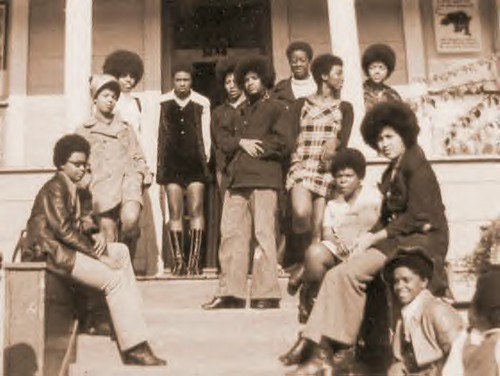
Summary: Delphine has high hopes when her father and her grandmother send her and her two sisters to Oakland, California from Brooklyn to visit their mother, Cecile, who abandoned them seven years earlier. During this summer, Delphine takes care of her sisters, learns about her mother, and attends summer camp run by the Black Panthers, receiving a radical education and gaining new, and sometimes scary, experiences. 


photo
Women outside the Black Panther headquarters in Oakland,California 

Reading Level: Ages 9-12, Lexile 750L


Key words/phrases:
    1. Civil Rights Movement
    2. 1968 Oakland California
    3. Black Panthers
    4. Summer Vacation
    5. African Americans

Suggested Delivery: Small group

Electronic Resources:
1.    MIA: History: USA: The Black Panther Party details the Black Panther party and its history in Oakland, California.
2.    The 1968 Exhibit outlines The 1968 Project and provides a blog and a timeline which outline important events that occurred on a national and international level.  It also provides educator resources such as classroom supports and standards connections.
3.   This book is available to purchase as an audio book at The Audio Book Store.
4.   Pan-African News Wire Blog: “Oakland Origins of The Black Panther Party for Self-Defense” gives the background on the Black Panthers in Oakland, California.
Teaching Suggestions:
Key Vocabulary: Hippies,  Infiltrate, Stucco, Migrant, Washboard, Perfectionist, COINTELPRO (Counter Intelligence Program)

Reading Strategies to increase comprehension
   Before: Background should be provided to the student about Oakland, California and the nation in general in 1968. The above websites would be helpful in providing background information and having the students gain understanding of the feelings in this time. After looking at the websites, students can predict what they think will happen in the book. 

During: Provide the student with the reading guide below to help the student focus on important aspects of the story. Have the students jot down their thoughts in a reading journal to discuss when meeting in a small group with the other students who are reading this book.
1.      After reading page 29: What is Delphine expecting when she is about to meet her mother? Do you think her mother will meet her expectations or disappoint her?
2.      After reading page 48: Do you agree with Delphine’s opinion that her mother is crazy? Do you think Delphine’s expectations of Cecile make Cecile seem crazier or perhaps prejudged to be crazy by Delphine?
3.      After reading pg. 49: Do you think inside Delphine is less practical, strong and matter-of-fact as she declares? What do you think Cecile has in the kitchen? Would you go to the Center if you were Delphine and her sisters?
4.       After reading page 67: Do you think it matters that Fern’s doll doesn’t look like her? Is Crazy Kelvin right?
5.      After reading page 79: Why do you think Cecile is worried about the FBI and the COINTELPRO?
6.      After reading page 85: Why do you think Delphine feels so strongly about her name? Do you agree with her feelings about names being important?
7.      After reading page 87: Why does Delphine’s opinion about the center change?
8.      After reading page 91: Why does Vonetta not stand up to the Ankton sister but instead sides with them?
9.      After reading page 94: Does your opninon of Cecile change after she breaks up the fight? Why doesn’t Delphine break up the fight?
10.  After reading page 110: Do you agree with Cecile’s description of Delphine?
11.  After reading page 120: Does Cecile listen to the sisters when she gives them the radio? What might her motivation be for giving them the radio?
12.  After reading page 125: Why doesn’t Papa tell Big Ma what happened? What might make you think Big Ma already knows? How \would she already know?
13.  After reading page 132: What is the significance of “Dry your eyes”?
14.  After reading page 135: How does Delphine describe her mom’s voice? But how does she describe her on the next page?
15.  After reading page 149: What do you think Cecile’s poem means?
16.  After reading page 155: Does Cecile’s comment show’s she cares?
17.  After reading page 158: What do you think Fern saw?
18.  After reading page 167: Why do you think Cecile was arrested?
19.  After reading page 169: Why would Cecile deny them? Why does Delphine go along with it?
20.  After reading page 179: Why doesn’t Delphine want to leave Oakland?
21.  After reading page 181: Do you think Fern seeing something has to do with crazy Kelvin?
22.  After reading page 198: What was Kelvin’s secret? Were you surprised? Why does he act like he does earlier in the story then?
23.  After reading page 201: Do you sense a shift in feelings toward Cecile by Delphine and her sisters?
24.  After reading page 215: What was the thing that they all needed from their mother?

   After: In a small group, discuss the changes Delphine and Cecile’s relationship underwent. Would the students have predicted this changed form the first couple of chapters? What choices and events by both characters helped them change? Also discuss whether the book title (One Crazy Summer) is appropriate for this book and how.
 Rita Williams-Garcia

Writing activity demonstrating inferential comprehension: Students can write a letter either from the perspective of Cecile to Delphine, or from the perspective of Delphine to Cecile, dated one year from the end of the story. The students will answer and reflect on the following questions: What do you imagine their relationship to now be like? Will they have visited each other since the summer in the book ended? Will their relationship have gotten better or worse? Make references to events in the story and events that you think might happen during this year in your letter.

The Black Regiment of the American Revolution

The Black Regiment of the American Revolution (Hardcover) ~ Lind... Cover Art
(Brennan, Linda Crotta, and Cheryl Kirk Noll. The Black regiment of the American Revolution . North Kingstown, R.I.: Moon Mountain Pub., 2004. Print.)
Summary: This book discusses the role African –Americans played in the American Revolution as members of the Rhode Island Black Regiment. It analyzes the motives for joining, how their lives were before joining, what their experience fighting was like, and how their lives were after the war ended.

Reading Level:  Ages 9-12.

Key words/phrases:
1.      American Revolution
2.      African-Americans
3.      Black Regiment
4.      Rhode Island
5.      Slaves


Suggested Delivery: Individual / Small group

Electronic Resources:
1.      Black Soldiers in the American Revolution: This PDF compliments the book by providing individuals background information on the blacks who served in the army.
2.       African Americans In The Revolutionary Period  by the National Park Service provides background for teachers on the involvement of African Americans in the Revolutionary War.

 
Teaching Suggestions:
Key Vocabulary: emancipation, regiment, pension, redoubt, privateer, musket, mulatto, militia

Reading strategies to increase comprehension:
         Before: Survey the book to get an overall picture of what the book will be about. Have the students Note the title and headings, skim the overview and summary and note what main ideas are covered. After surveying, turn each of the headings into a question. These questions give a purpose for reading as they will be answered as the book is read.
         During: The students will then read the text to answer the questions created in the before activities, helping the student to focus their attention on specific and key ideas. 
         After: After reading the whole book, or perhaps just a section, have the student try to answer their question from what they remember from the text. If the student cannot answer the question, have them go back and review this portion of the text to be able to answer their question. Have them jot sown a brief answer to their question to endure that they can answer the question in a concise manner. The have students review the main points in the book in order that they can put all the ideas together into one connected idea.


Writing activity demonstrating inferential comprehension: Write a poem or short story as a soldier in the black regiment expressing the emotions and experiences they would have experienced, making sure to describe his life before the war, and the changes it underwent because of the war, during and after the war ended.

Day of Tears

(Lester, J. (2005). Day of tears: a novel in dialogue. New York: Hyperion Books for Children.)

Summary: A book written completely in dialogue Julius Lester reveals the perspectives and emotions of a varying group of surrounding he practice of slavery., including a slave auctioneer, a master, enslaved parents and their daughter, other slaves, and the masters daughters. The conflicting opinions and feelings sometimes within characters leads to an emotional book with a behind the scenes view on slavery.


Reading Level:  Ages 11-14, Lexile NP

Key words/phrases:
1.      Slavery            
2.      Slave auction
3.      Separation of families
4.      Savannah, Georgia 1859
5.      Opposition to and defense of slavery

Suggested Delivery: Small group

Electronic Resources:
1.      PBS: Pierce Butler and Fanny Kemble provides background information on these two characters who play a pivotal role in the book.
2.      PBS: The Weeping Time provides information on the slave auction which occurs in this book as well as links to additional material relating to this topic.
3.      Library of Congress American Memory: What became of the slaves on a Georgia plantation? provides information which was used in the writing of this book on the slave auction.

Teaching Suggestions:
Key Vocabulary: plantation, vigorously, runaways, dignity, quarters, auctioneer, reputation

Reading strategies to increase comprehension:
         Before: brief mini lesson on slavery specifically focusing on how slaves were sold at slave auctions. Also incorporate, or at least introduce the ideas of differing feelings towards slavery of those involved. Discuss how a student might feel if they were a slave, a master, a slave auctioneer, a family member o f a slave being sold, and a family member of a master selling the slaves.
         During:  Students will be described characters per chapter and will read their characters parts. After each chapter, students will discuss how their characters actions and feelings makes tehm feel and preict (with a brief note or two) what their character will do next. Predictions will be written down and checked as they continue reading.
         After: Have students create a chart with each of the characters listed and list the characters feelings and their actions, towards slavery and in general, and whether their feelings and actions match.

Character
Feelings
Actions
Match?
Master Butler


Fanny


Emma


….


Julius Lester, storyteller, historian, novelist
Julius Lester

Writing activity demonstrating inferential comprehension:  Students can choose a character from the story and write a one page dialogue with another character from the story, or a monologue expressing their feelings towards slavery, for or against as appropriate for their character. The chart from the “After” activity can be used as a guide.